Partnership for Education of Health Professionals

Since 2022, the Department of Public Health and Centre for Online and Blended Learning (COBL) have been part of the large-scale international research and capacity development project Partnership for Education of Health Professionals (PEP).
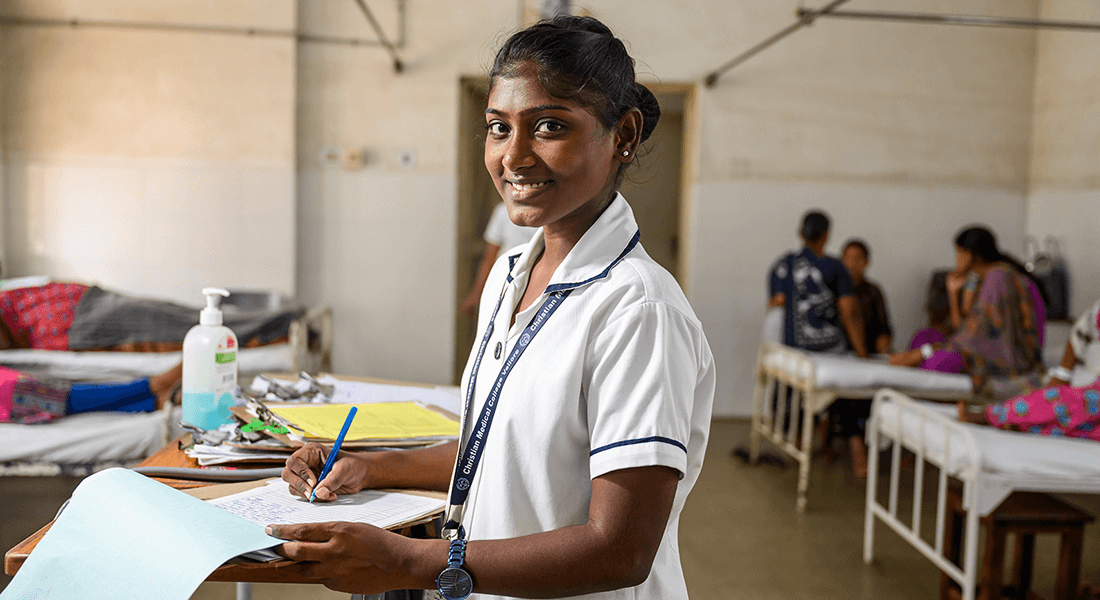
Our part of the PEP project focuses on collaborative capacity development with partners in India and Kenya. The goal is to enhance the formal health professions education systems as a means to addressing pressing challenges such as the rising burden of cardiometabolic diseases, healthcare workforce shortages, and underserved populations.

The work is guided by three interlinked objectives:

  • To strengthen the capacity of PEP partners to successfully leverage digitalization to enhance educational quality and reach in India and Kenya
  • To strengthen the PEP partners capacity to address challenges facing health professions education in India and Kenya through an ambitious agenda of collaborative educational research
  • To strengthen the PEP partners capacity to address challenges at the intersection of education and clinical practice for Indian and Kenyan health professionals through an ambitious agenda of collaborative social science research


Project management


Project staff


Key achievements from our collaborative activities during PEP Phase 1 2025-2029 include:

  • Convened over 90 delegates from India, Kenya and Denmark at the PEP Symposium 2025 in Copenhagen.

  • Co-developed and launched the MOOC Tackling Cardiometabolic Diseases – Insights from India on Coursera in May 2025.

  • Co-organised and delivered six webinars in 2025 through the bimonthly series Innovations in Online and Blended Learning for Health Professions

  • Education.

  • Joined two visits to Kenya involving over 50 Danish

  • and Kenyan stakeholders co-designing the next Kenyan PEP projects.

  • Hosted the international research symposium Feedback in Higher and Professional Education with 18 leading scholars from Europe, Australia and the

  • UK.

  • Continued eight educational research mentorships with Indian PEP partner faculty, with the first manuscripts submitted to journals.

  • Hosted a delegation from the Public Health Foundation of India for a capacity strengthening visit in Copenhagen.

  • Initiated six Communities of Practice and one Working Group to convene PEP partner staff from multiple institutions around key thematic areas.

  • Expanded the PEP-UCPH team significantly, including the recruitment of two PhD students, two postdoctoral researchers, a research assistant and a senior education advisor.

  • Established a new Health Workforce research group at the Department of Public Health, meeting biweekly and hosting international scholars.

  • Secured ethical clearance at UCPH for the full PEPUCPH research programme and initiated PhD data collection.

Link to full annual report: PEP-UCPH Activities and Learning 2025

Key achievements from our collaborative activities during PEP Phase 1 2022-2024 include:

Over 300 faculty and support staff participated in onsite workshops on online and blended learning techniques at partner institutions in India.

  • Three exchange visits to UCPH with 20 staff from AIIMS, CMC, and PHFI.

  • One Massive Open Online Course (MOOC) on CMD prevention, management, and care for health professionals jointly developed by CMC and UCPH, ready for launch in November 2024.

  • Two video-based online learning resources (An introduction to HPE research and Innovative approaches to OBL) targeting faculty and teaching-learning specialists at HPE institutions in LMICs.

  • Nine online seminars on educational research and online and blended learning with almost 700 participants (and to be continued).

  • Six health professions education research mentorships established between Indian staff and experienced international researchers.


  • Jensen, L. X., Bearman, M., Boud, D., & Konradsen, F. (2025). Feedback encounters in doctoral supervision: The role of generative AI chatbots. Assessment & Evaluation in Higher Education, 0(0), 1–14. https://doi.org/10.1080/02602938.2025.2478155
  • Jensen, L. X., Buhl, A., Hussain, S., Karan, A., Konradsen, F., & Bearman, M. (2023). Digital education for health professionals in India: A scoping review of the research. BMC Medical Education, 23(1), 561. https://doi.org/10.1186/s12909-023-04552-2
  • Jensen, L. X., Buhl, A., Sharma, A., & Bearman, M. (2024). Generative AI and higher education: A review of claims from the first months of ChatGPT. Higher Education. https://doi.org/10.1007/s10734-024-01265-3
  • Karan, A., Hussain, S., Jensen, L. X., Buhl, A., Bearman, M., & Zodpey, S. (2024). Non-communicable diseases, digital education and considerations for the Indian context – a scoping review. BMC Public Health, 24(1), 1280. https://doi.org/10.1186/s12889-024-18765-7


Contact 

Jane Brandt Sørensen
Social science and capacity research

Anne-Marie Mosbech
Digital education, India

Lasse X Jensen
Educational research

Helle Max Martin
Digital education, Kenya

Funded by