
Intergenerational educational mobility and health
Epidemiological studies about the impact of individual and family health on intergenerational educational mobility
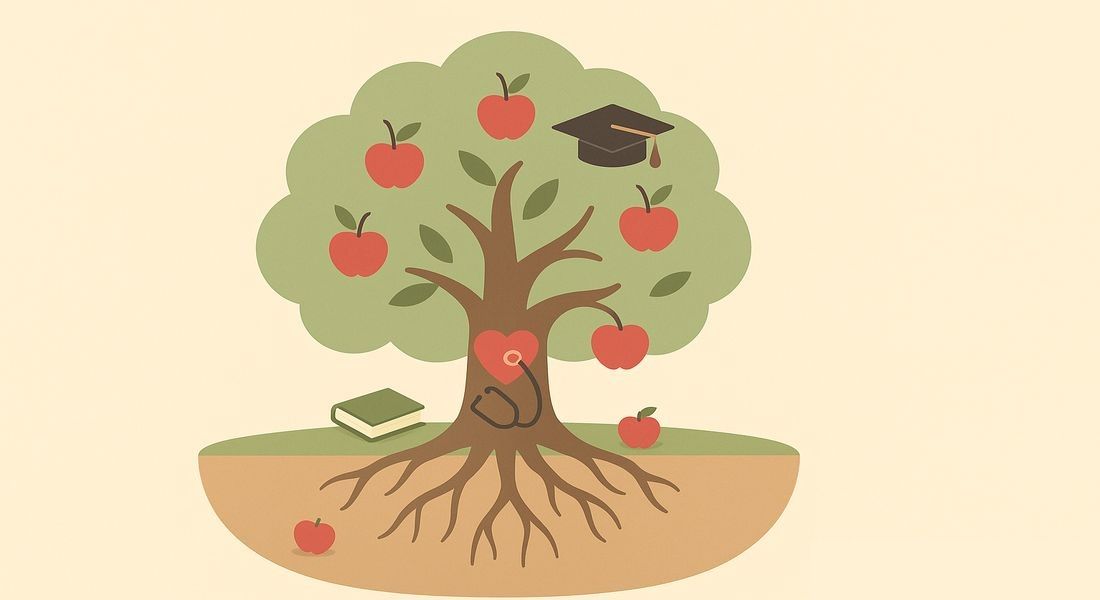
This project investigates how individual and family health may influence whether children achieve higher education than their parents, using nationwide register data to explore patterns in intergenerational educational mobility.
The overall aim of the project is to explore how individual and family health impact intergenerational educational mobility.
Understanding intergenerational educational mobility is crucial for identifying factors that either sustain or reduce social inequality. Currently, 24% of the Danish population aged 25–69 lacks vocational or higher education. An educated workforce benefits individuals and society alike, emphasizing the importance of providing everyone with the opportunity to pursue the education they desire and are capable of completing. Consequently, educational mobility is of significant scientific and political interest.
Analyses of educational mobility usually assess whether children attain a higher, same, or lower level of education than their parents, serving as indicators of societal efficiency and equal opportunity. Moreover, the family environment significantly influences educational prospects. However, there is limited knowledge about how an individual’s health or the health of close family members affects educational mobility.
This project seeks to investigate the effects of individual and family traits and health on educational mobility. The analysis will consider factors such as somatic and mental health diagnoses, genetics, childhood conditions, and neighborhood influences that may impact educational outcomes.
Using data from national health and social registers of individuals born between 1975 and 1988 and their families, we will apply statistical models to explore these relationships. The findings aim to inform, for example, whether the education system should focus more on children’s health and health-related traits, as well as on those growing up with family illnesses
Five planned studies on how individual and family traits and health impact educational mobility and the impact of genetics, upbringing and community characteristics. Publications anticipated from 2026.
Research group leader
Terese Høj Jørgensen
Associate Professor
Email: tshj@sund.ku.dk
Phone: +4535335886
Funding
Inge Lehmann grant
Project periode: 2025 -
Staff
| Name | Title | Phone | |
|---|---|---|---|
| Else Foverskov | Associate Professor | +4535328974 | |
| Marcelo Rene Cardona Cabrera | PhD Fellow | ||
| Terese Høj Jørgensen | Associate Professor | +4535335886 |