
Social foreground and health
Epidemiological studies on intergenerational perspectives on social inequality in health and healthcare use among older adults.
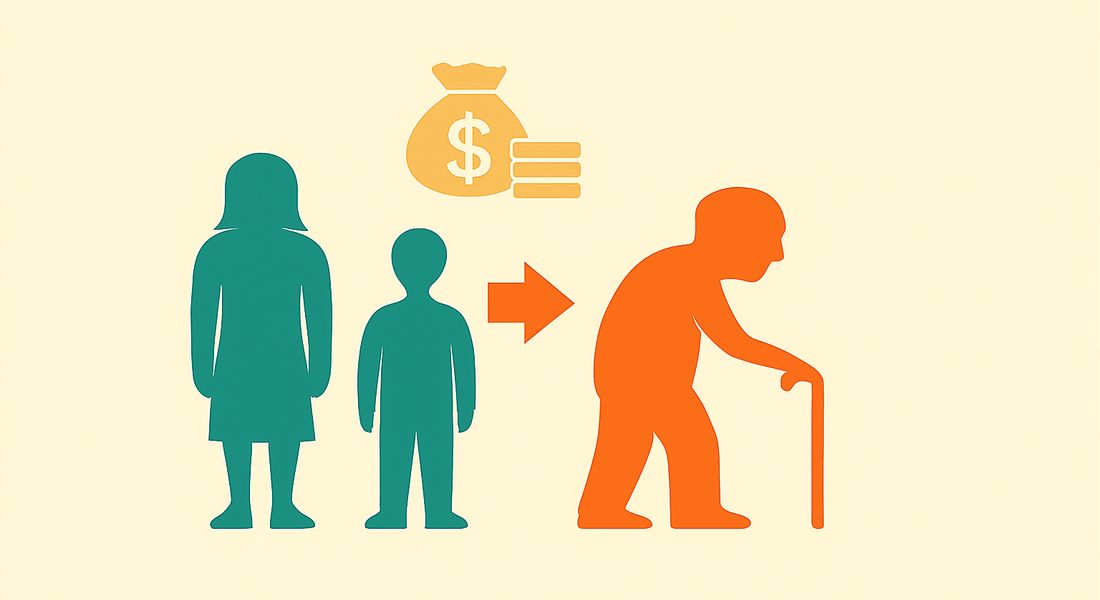
This project uses intergenerational linked Danish and Swedish register data to investigate how adult children and their socioeconomic resources impact their parents health, healthcare use and longevity in old age.
The overall aim of this project is to study the impact of social foreground, measured by the socioeconomic resources of adult offspring, on health, healthcare use and mortality in old age
This project is the first to investigate social foreground in a Danish context. Life expectancy continues to increase in the Nordic countries; however older people’s health and longevity differ depending on their own, their partner’s and even their parents’ socioeconomic position. Recently, the concept of social foreground has been introduced to contribute to the explanation of differences in health and longevity of older adults. The concept contends that the socioeconomic accomplishments of adult offspring improve health and longevity of parents in old age. The mechanisms behind social foreground are not fully established but may include the transfer of material and non-material resources.
Based on Berkman and Glass’ (2000) theory on how social relations impact health, Torssander (2013) has suggested that social support, social influence, and access to resources are three possible pathways by which socioeconomic position of adult offspring can influence parental health in old age. For example, adult offspring’s education may influence parental health through lifestyle, use of healthcare and adherence to medical treatments. Adult offspring’s occupation may influence parental health through stable and privileged labor market positions that provide knowledge and contacts that are important for health and navigation in the health care system, and finally flexible work hours that enable adult offspring to engage in parental contact with health and eldercare. Adult offspring’s income may influence parental health through material means. In this project, social foreground and health in old age was investigated using Danish and Swedish nationwide register data
We investigated the significance of socioeconomic resources of adult children for their parents' health, measured by cardiovascular disease, type 2 diabetes (T2D), and chronic obstructive pulmonary disease (COPD), as well as the development, treatment, and survival of these diseases.
Overall, we found that having adult children with a short or medium education was associated with a higher risk of being diagnosed with cardiovascular disease, T2D, and COPD after the age of 65, compared to having an adult child with a long education. Additionally, we found that having adult children with short or medium education was associated with more deaths, where between 15-26% of the extra deaths could be attributed to cardiovascular diseases, T2D, and COPD, compared to having children with long education.
For both Danish and Swedish elderly, we found that having adult children with short and medium education, low or medium income, and unskilled or manual occupations was associated with a higher risk of stroke and subsequent mortality compared to elderly with children with long education, high income, and skilled non-manual work.
For patients with an acute coronary event, we found that older adults with children with short education had lower odds of receiving the recommended examination compared to older adults with children with long education.
Finally, we found associations between adult children's education level and the development of complications and death in patients with T2D, as well as readmissions and death in patients with COPD
Publications
Other dissemination
Er dit barn advokat eller ufaglært? Svaret kan afsløre sandhed om dit eget helbred - Jyllands-Posten
Har du højtuddannede børn? Det kan have indflydelse på, hvor længe du lever
Har dine børn en lang uddannelse? Så vil du formentlig komme til at leve længere
Interview live i TV2 News om betydningen af voksne børns socioøkonomiske forhold for deres forældres helbred i alderdommen
Student projects
Master thesis in Public Health Science entitled ‘The impact of having adult offspring and their socioeconomic characteristics on diagnosis of type 2 diabetes and subsequent death among older adults’ 2023 by Sofie Peti Andersen, University of Copenhagen
Master thesis in Public Health Science entitled ‘Intergenerational perspectives on depression in old age’ 2024 by Anna Becker-Larsen, University of Copenhagen
Bachelor thesis in Public Health Science entitled ‘Intergenerational perspectives on dementia’ 2025 by Olivia Gøjgaard Føhns and Adam Toft Michelsen
Research group leader
Terese Høj Jørgensen
Associate Professor
Email: tshj@sund.ku.dk
Phone: +4535335886
Funding
Helsefonden
Hjerteforeningen
Project period: 2020-
Staff
| Name | Title | Phone | |
|---|---|---|---|
| Mathilde Marie Brünnich Sloth | PhD Fellow | ||
| Merete Osler | Clinical Professor | +4538633280 | |
| Terese Høj Jørgensen | Associate Professor | +4535335886 |